
DJ or Vibe Coder?
We're all debatably talented people with laptops. A conductor doesn't play the saxophone — that's not the disqualification people assume it is, and in 2026 it's getting less disqualifying every month.

There's an app in the App Store with my name on it. I can't tell you exactly how the code works.
Not "I'd need to brush up." I mean I couldn't open the project, find the file that handles the beacon color, and tell you what it says. I've never written a line of Swift. I'm not going to start.
I've said some version of this out loud a few times now and I keep getting the same reaction, which is a pause. The pause is people deciding whether I just admitted to fraud.
It's All Jazz
Here's how I've described it for years, long before the flavor of the day became AI.
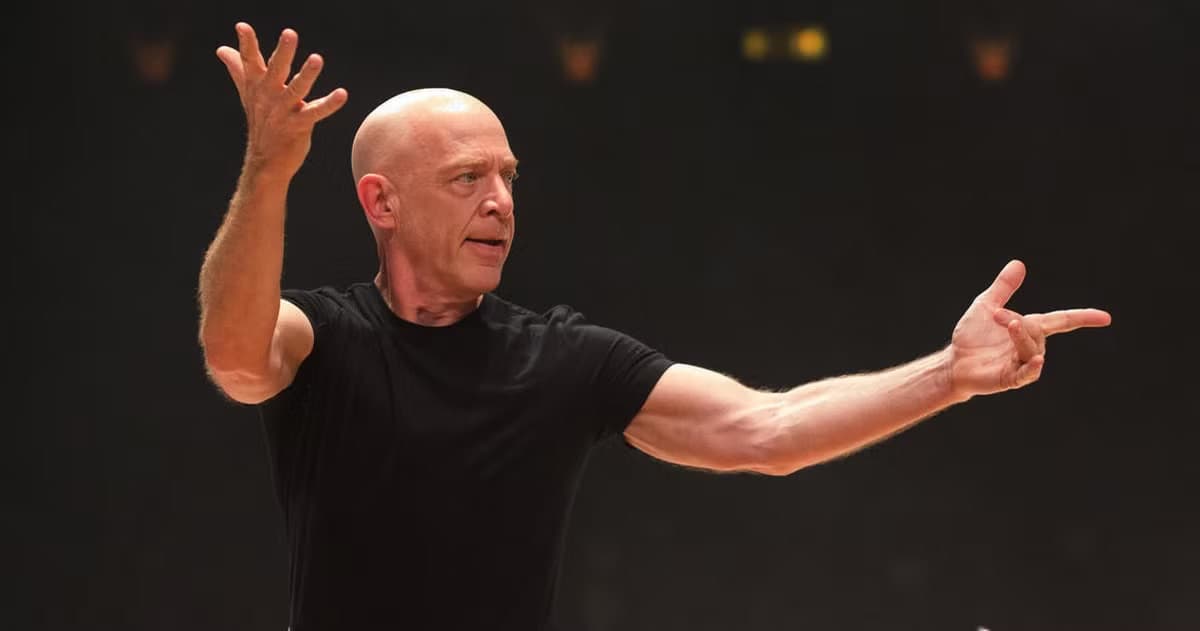
I'm the leader of a jazz ensemble. I conduct the band, set the tempo, pick the music. I don't write musical notation and I don't play an upright bass. I direct the people who do — and I expect them to bring their talents to the piece, not just play the notes as written. My job is to understand the material and the players well enough to coax better performances out of them; to get them to play between the notes. You remember J.K. Simmons' character in Whiplash? That's me. Minus the caustic toxicity.
A conductor who doesn't know what a horn player can do is just a person waving. You have to know the instrument's range, what's hard for it, what it sounds like when it's being played badly and why. What you don't have to do is slobber in the spit valve.
I've been conducting rooms of talented artists for thirty years. It dates back to 1994 with Blockbuster and IBM's video-on-demand trials — a prototype that, for all its flaws and rough edges, was first of its kind and about fifteen years early, which is its own post. Since then: Sony, Schematic, PacketVideo, Interest Labs. Different instruments, different compositions, same job.
The receipt
At Interest Labs I stood at a whiteboard for about forty-five minutes and drew every screen of a mobile app, explaining what each element did as I went. When I was done, the board was a jumble of rectangles with colored lines connecting them like some maniac's org chart of a criminal network.
The developers in the room snapped pics of the whiteboard. They came back the next day with five pages of professionally drafted wireframes. "Yeah, that's what I meant." I signed off. Two days later I'm tapping through the app on my phone. "E-flat. Drummer, put something breezy in there. Groove."
For something that sounds easy, it sure took a ton of work and failure to get right. In the days of AI vibe coding, "I described it and they built it" is "Tuesday." But back then I was paying fifteen to twenty thousand dollars for each mobile application, to people who charged by the hour. Forty-five minutes at a whiteboard to a working build in seventy-two hours was an enormous amount of output per dollar of somebody else's labor. Margin was the number I was being measured by. Not lines of code — dollars per hour of expensive expert time, and how few of those hours I could spend to make miracles happen. The worst possible outcome, after a cathartic outpouring of wildly gesticulated product features, would be blank stares from the engineers and graphic designers.
The vibe carried the specifications without needing to be spelled out. The teams I worked best with were the ones who — when the client needed a flower — could take a blank sheet of paper and surprise you with a variety of flora. The ones I didn't vibe with were those who couldn't lift a pencil or click a mouse without the full paint-by-numbers spec spelled out for them. If the groove made sense, the team didn't need to come back and ask me anything. Success came from creative riffing on the material, not from generating sheet music.
To this day, I've yet to have a client offer to pay for documentation, a diagram, a PowerPoint or a one-sheet — but offer a killer product and they'll open that wallet every time.
“If your business model requires getting money out of a client's pocket and putting it into yours, do nothing else but deliver stuff they'll pay for.”
There's folks out there with legit name-brand business school credentials who were never taught this. You can have that one for free.
What changed in 2026
Nothing about the vibe. Everything about the band.
The ensemble used to cost twenty thousand dollars and require scheduling, parking passes, Aeron chairs and craft beers in the break room. Now it's available at 11pm on a Tuesday for the price of a subscription, it never gets tired, and it will confidently hand you something wrong.
That last part is the whole 2026 argument, and it's the reason not-typing stopped being a disqualification.
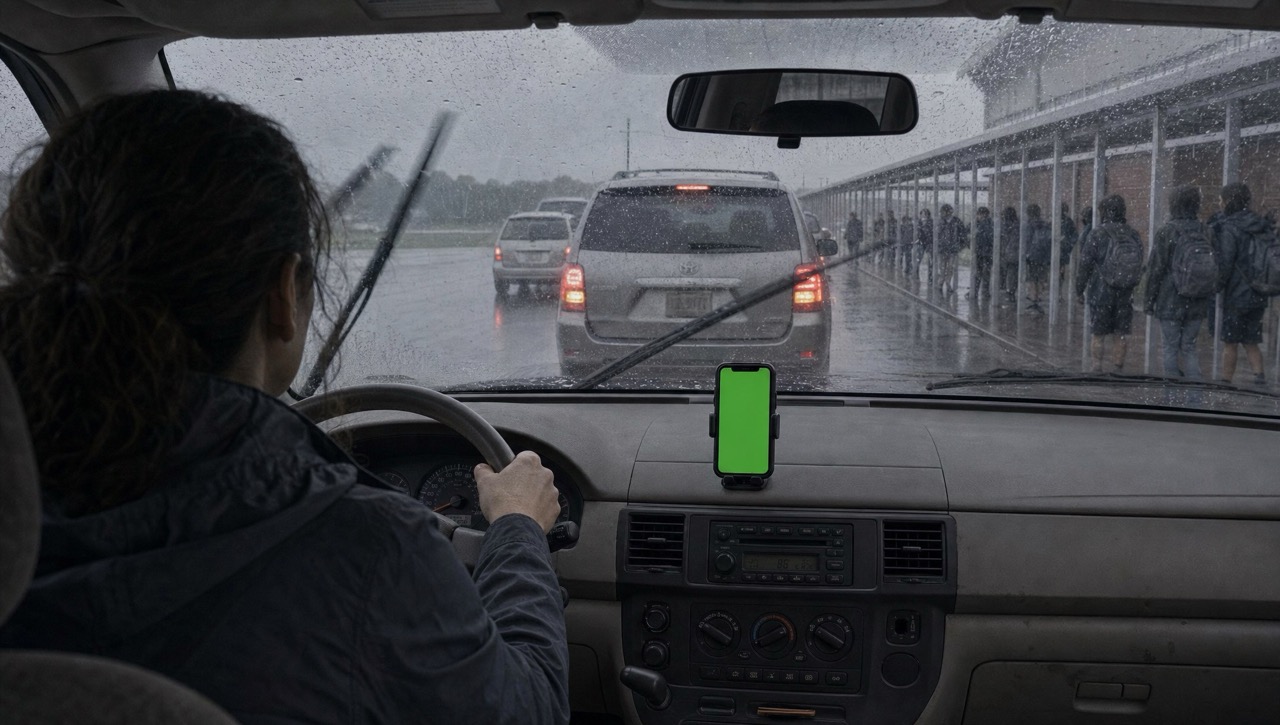
Two weeks ago I wrote about burning through 2,250 video credits and never getting a usable twenty-second spot, mostly because the engine kept putting four windshield wipers on a minivan and handing it over with a completely straight face. Every render cost the same whether I kept it or killed it. The credits didn't go to the frames I kept. They went to the ones I threw out — and throwing them out became the job.
Same goes for app development. Generating is free now and infinitely repeatable. The verdict isn't. Somebody has to look at what came back and say this is wrong, and here's specifically why, and here's what different looks like. That's a sentence you can only write if you understand both the instrument and the role it plays in the holistic piece.
“So the skill isn't typing the answer. It's catching all the wrong ones along the way.”
I rebuilt PJK.net and its CMS from scratch in a day. The line I keep coming back to from that post isn't that I built it fast. It's that I can explain every decision in it — the data model, why the share-sheet capture works the way it does, what I gave up. Not because I hand-coded it. Because I could explain it.

Keeping it real
I know some of you are steamed that I don't enable comments on my posts, and you're just itching to tap out a blistering screed calling me on my BS. Well, this one's for you. I am going to call BS on myself to save you the hassle.
I can only catch what I know. GitHub, Supabase, Vercel, Next.js — four technologies I hadn't heard of before I started this, all now critical in the software I've shipped. I adopted every one of them on a recommendation I was not qualified to evaluate less than a year ago.
In my comfort zone, I catch things fast. Anything outside those lines, I'm taking someone's word for it — and "someone" is increasingly a model with no incentive to tell me when it's guessing. Deciding whether to trust a suggestion in a field you can't assess is a real skill, it's separate from directing, and I'm still working out how I do it.
In my world, that's the state of "state of the art." Not "anyone can build now." More like: the cost of building is plummeting, the cost of knowing whether it's any good isn't, and all that risk now rides not on one's experience, but on one's wisdom gained from experience. That's juice you can't squeeze out of anyone's AI engine, no matter what the prompt.
I don't write code. I never did. It's just that for thirty years, I've followed my gut on what makes great experiences, and that's a skill set that continuously succeeds in this evolving landscape. Just like a crowd of festival-goers can be enthralled by a guy messing around on a MacBook, I'm shipping apps I didn't code, hoping to delight and surprise when I drop that codebase.
Want the build stories?
Product builds and the technical decisions behind them live over at Bacon Cheese Frosting.